
What to Check Before Using a Gaming Marketplace
Use a gaming marketplace with clearer expectations. Learn how listings, seller details, account access, pricing, and game policy risks affect each purchase.
In this article6 sections
A gaming marketplace can look simple: find an account with the rank, skins, items, or progression you want, pay, and start playing. The details matter more than the listing headline. You are buying access to a digital account from an independent seller, and the quality of the information available before checkout shapes the decision.
For competitive players, the appeal is obvious. A marketplace account may offer a different starting point than a fresh account, whether that means unlocked content, an established rank history, or access to a game you do not want to build from zero. But account purchases carry real limits. Buying, selling, or transferring accounts is against the terms of service of most games. No account transaction is risk-free, and a listing should never be treated as a promise that an account will remain available forever.
What a Gaming Marketplace Should Make Clear
The first job of a marketplace is not to make every listing sound valuable. It is to give you enough clear information to decide whether an account fits your goals and whether the trade-offs are acceptable.
Start with the game, platform, and region. These basics affect whether the account is useful to you at all. A high-ranked account in the wrong region, on the wrong platform, or with game progress that does not match what you need is not a good purchase just because the price looks low.
Then look at what the listing actually includes. Rank alone is not the whole account. In games such as League of Legends, Valorant, Teamfight Tactics, CS2, Apex Legends, Marvel Rivals, Fortnite, and Wild Rift, players may care about different things: competitive access, unlocked agents or champions, cosmetics, placement status, match history, or existing progression. In survival games, resources, items, and character progress may matter more.
A good listing separates those details instead of leaving you to guess. Read the description closely and treat vague wording as a reason to ask questions before paying, not after.
Rank is not the same as a good fit
A rank can be a useful filter, but it does not tell you everything about an account. The account may have a rank you want while its recent performance, available content, server, or progression makes it a poor match for how you play.
Think about what you plan to do once you sign in. Are you looking for an account to play ranked immediately? Do you want a certain collection of characters or cosmetics? Are you trying to avoid repeating early progression? Your answer should determine which listing details matter most.
This is also where expectations need to stay realistic. Purchasing an account at a higher rank does not change your own current skill level. If your main goal is to perform better in ranked games, coaching or duo queue can be a more direct fit. An account purchase changes the account you use. It does not build your decision-making, mechanics, or map awareness.
Read Listings Like a Player, Not a Bargain Hunter
The lowest price is not automatically the best value. It can also mean the listing contains fewer details, less relevant progression, or an account that does not match your region and platform. Compare accounts based on what you will actually use, not just the biggest number in the title.
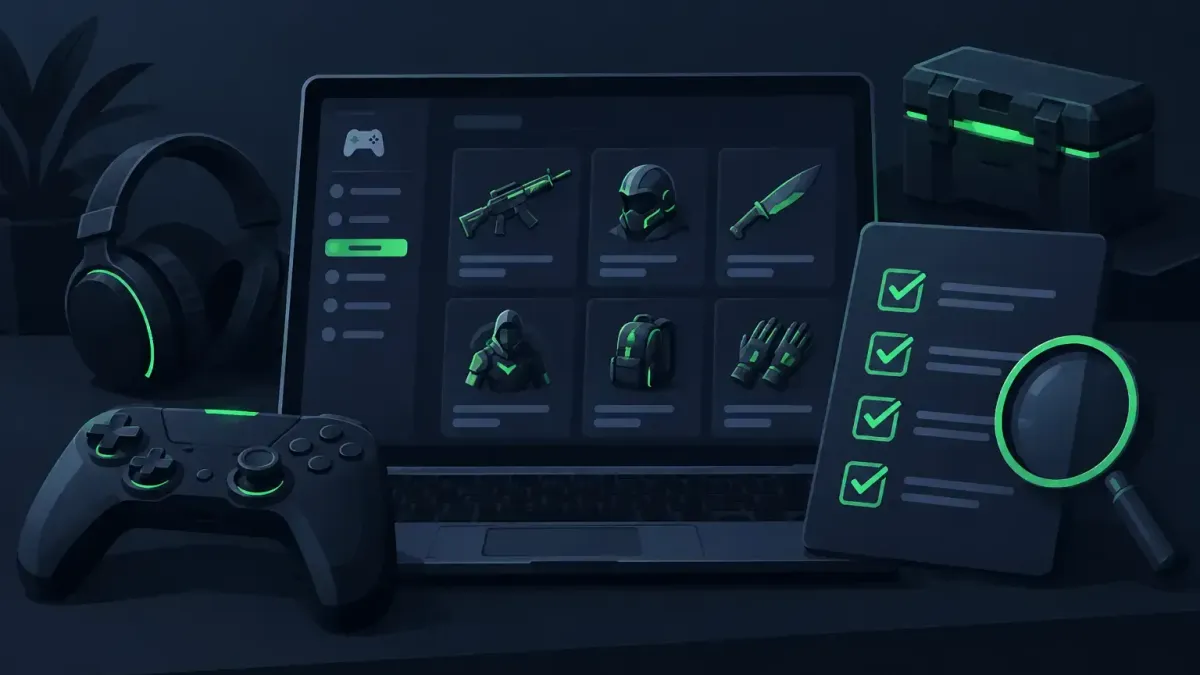
Before choosing a listing, check the account level, competitive status, rank where relevant, server or region, and the specific content shown in the description. If cosmetics or items are the reason you are buying, confirm which ones are included rather than relying on a general claim about a full inventory.
Pay attention to whether the seller has described the account in direct terms. Specific information is useful. Broad phrases such as "loaded" or "high value" are not enough on their own. You should be able to identify what is being offered without making assumptions.
It also helps to decide your non-negotiables before browsing. For example, you may need a particular region and ranked access, while cosmetics are optional. Another player may only care about a certain collection and have no interest in competitive play. Setting those priorities first makes it easier to skip listings that look attractive but do not solve your actual problem.
Understand the Account Ownership Risk
This is the part many buyers rush past. Game publishers usually treat accounts as non-transferable. That means buying an account can put it at risk of restriction, recovery, or other action under the game’s rules. A marketplace can organize listings and payments, but it cannot change the publisher’s terms of service.
There is also a practical account-history issue. The account existed before you bought it. Its past use, prior connections, and original ownership are not things you can fully control. Do not assume a transfer makes those factors disappear.
That does not mean every buyer has the same priorities. Some understand the risk and decide an account still fits their situation. Others would rather keep full control by progressing on their own account. The right choice depends on what you are comfortable with, how much the account matters to you, and whether you can accept that no marketplace purchase comes with permanent certainty.
A clear marketplace should not hide this behind hype. If a listing is presented as if it has no downside, that is a reason to slow down.
Reward boxes
Open a box, win real rewards
Spend N1 Coins to open a box and win coins, checkout discounts, or a free coaching/boost service.
Keep Payment and Access Details Practical
When you buy from a gaming marketplace, use the platform’s normal checkout and order process. Avoid moving a transaction into private messages or an outside payment arrangement just because someone asks. Keeping the purchase within the marketplace gives you a clearer record of what was listed, what was paid for, and what was delivered.
After purchase, follow the platform’s instructions for account access. Change account details only where the game and account system allow it, and do not share your own personal account credentials with an independent seller. If anything about delivery does not match the listing, raise the issue through the marketplace’s support process while the order details are still easy to review.
Keep screenshots or records of the listing description, selected options, and payment confirmation for your own reference. This is not about expecting a problem. It is basic order hygiene, especially when the product is a digital account with many details that may not fit neatly into one title.
Choose Between an Account, Boosting, and Coaching
A marketplace account is one route, not the answer to every ranked problem. If you already have an account you value and want to move from one rank to another, a boosting service may better match the goal. If you want to play alongside a stronger player, duo boosting keeps you involved in the games. If you are stuck because of repeat mistakes, coaching can give you a climb plan, VOD feedback, and practical areas to work on.
Those choices carry different trade-offs. Boosting is also against most games’ terms of service, so no method is risk-free. The important difference is what you are paying for. An account marketplace offers an existing account. Boosting focuses on progress for an account. Coaching focuses on your own improvement.
At N1Boost, marketplace accounts are listed by independent sellers, while boosting and coaching are separate services with their own order options. That separation matters because it lets you choose based on the outcome you actually want instead of forcing every need into one purchase type.
Ask the Question That Matters Most
Before checking out, ask one direct question: what will this account let me do that I cannot reasonably do with my current account? If the answer is specific and the listing supports it, you can make a more informed choice. If the answer is mostly pressure from rank, cosmetics, or a price that seems too good to ignore, give yourself time to reassess.
The best marketplace decision is rarely the fastest one. It is the one made with clear expectations about the account, the seller information, the game’s rules, and what you want from your next session.
Ready to climb?
Pick a service, set your options and get matched with a verified booster. Secure checkout and 24/7 support.
- VPN and offline mode
- Verified boosters
- 24/7 support