
How to Use VOD Reviews to Climb Faster
Learn how to use VOD reviews to spot repeat mistakes, build better habits, and turn each ranked session into a focused improvement plan between games.
In this article6 sections
A close loss can feel like it came down to one bad teammate, one missed shot, or one fight that went wrong late. Sometimes it did. But if you want to know how to use VOD reviews to improve, stop treating the replay as proof that a match was unlucky. Treat it as a record of decisions you can repeat or change.
The goal is not to watch every minute of every game. That becomes homework, and most players quit after a few days. A useful review finds one or two patterns that cost you rank, then gives you a clear focus for the next session.
How to Use VOD Reviews Without Wasting Time
Start with a game that gives you useful information. Close losses, games where you felt lost, and matches where you performed below your normal level are usually better than easy wins. A win can still reveal problems, but it is easier to ignore them when the scoreboard looks good.
Review the match soon after playing if you can. You will remember what you were trying to do, what comms were happening, and why you made a specific call. That context matters. At the same time, do not review while you are still tilted. Give yourself enough time to watch the game like a coach, not like a player looking for someone to blame.
Before you press play, choose one question. For a Valorant player, it could be: “Why was I exposed first so often?” For League of Legends, it might be: “What did I do with the wave before each death?” In CS2, ask whether your deaths came from poor spacing, a bad timing, or taking a fight without support. One question keeps the review focused.
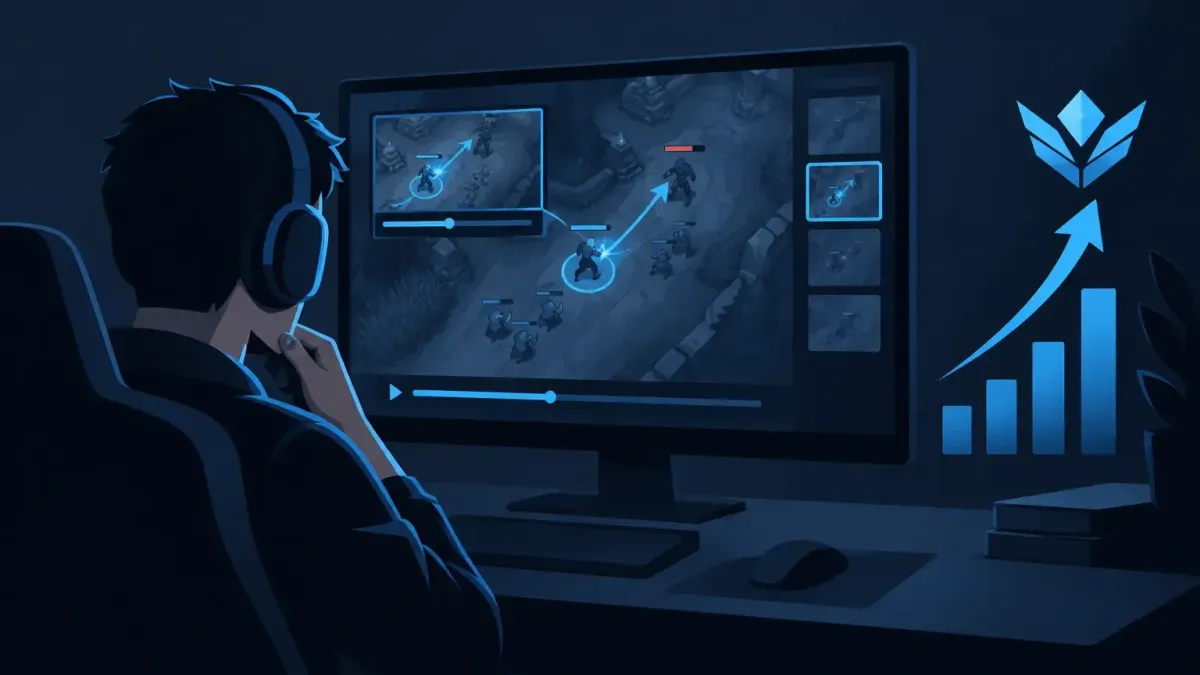
Watching an entire 40-minute game at normal speed with no purpose is rarely productive. Instead, jump to key moments: every death, every round loss, every failed objective setup, or every time you lost control of the match. Then rewind 15 to 30 seconds before the event. The mistake often started before the obvious moment.
Review Decisions, Not Just Mechanics
Most players already know when they missed a shot, failed a combo, or lost a clutch. Mechanics matter, but a VOD is most valuable because it shows the decision before the mechanical test.
When you die, pause before the fight begins. Ask what information you had. Did you know an enemy was nearby? Did you have vision, utility, teammates, or an exit route? Were you trying to force a play because you were behind, or did the situation actually require it?
This separates a real mechanical error from a setup problem. Missing a shot in a clean 50/50 duel is one thing. Taking that duel while low on resources, alone, or with no reason to fight is another. Fixing the setup can improve your results faster than trying to force more aim training into every day.
In team games, check your position relative to your team. A support player may be too far forward before an engage. A jungler may arrive after a lane has already committed. A CS2 player may be first contact without a teammate ready to trade. A Fortnite player may take height without enough materials or a clear rotation. The exact game changes, but the question stays the same: did your position make the next play easier or harder?
Use the scoreboard carefully
The scoreboard helps, but it does not explain the game by itself. High damage can come from low-value fights. A positive KDA can hide missed rotations, weak objective timing, or a habit of arriving late to important fights.
Use stats to find moments worth checking, not to decide who played well. If you had several deaths in the same area of the map, review those clips together. If your economy kept breaking in Valorant or CS2, look at the buy decisions that led there. Patterns matter more than one ugly stat line.
Build a Simple Review System
Keep notes short enough that you will actually use them. After a VOD review, write one repeat mistake, one better option, and one focus for your next games. For example: “I pushed side lanes without tracking two enemies. Before taking a side wave, check the map and hold an escape route.”
Avoid writing vague notes such as “play smarter” or “stop throwing.” They do not tell you what to do under pressure. A useful note is visible in the moment. “Play one step closer to cover” is actionable. “Use utility before re-peeking” is actionable. “Check teammate positions before starting an objective” is actionable.
Do not try to fix five habits at once. If your review shows poor crosshair placement, late rotations, reckless re-peeks, and weak map awareness, choose the issue that appears most often or creates the biggest losses. Work on it for several games, then review again. Improvement is slower when every match has a new rule.
A basic review routine can look like this:
- Mark two to four key moments from one ranked game.
- Rewind before each moment and identify the decision that set it up.
- Write one correction you can use in your next session.
- Review another game later to see whether the same problem is still there.
That last step is important. One bad decision can be random. The same bad decision across several matches is a habit.
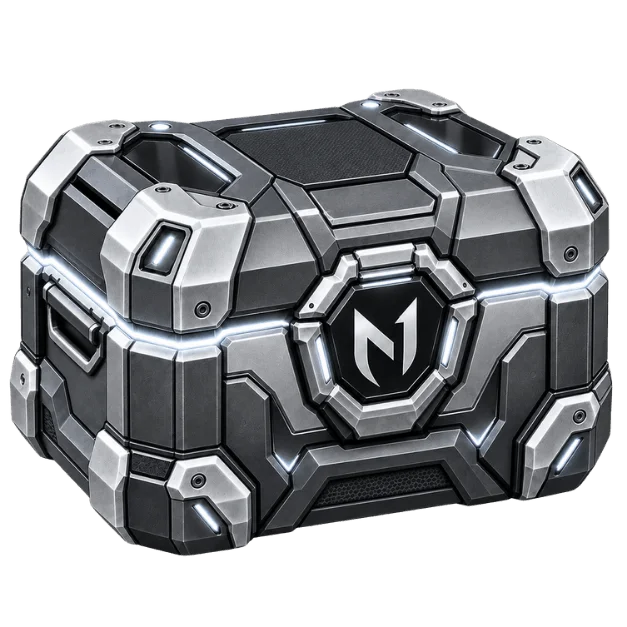
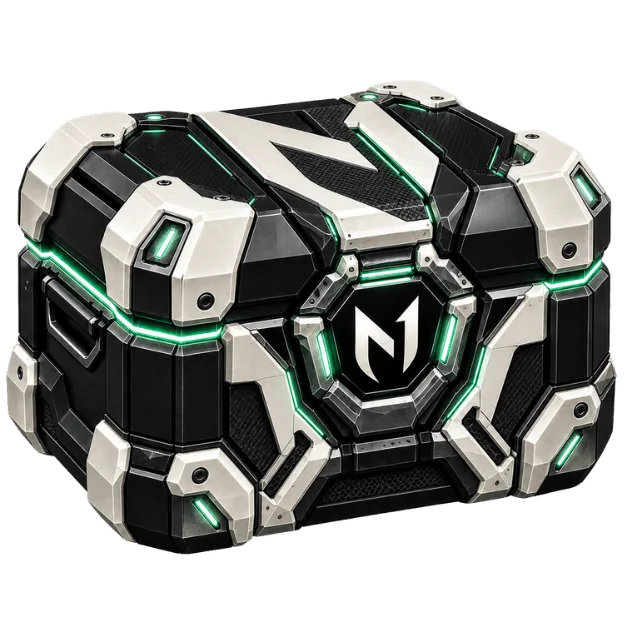
Reward boxes
Open a box, win real rewards
Spend N1 Coins to open a box and win coins, checkout discounts, or a free coaching/boost service.




What to Look for in Different Games
The details of a VOD review depend on the game and role. In League of Legends and Wild Rift, look at lane state, recall timing, vision, objective setup, and what you do after gaining a lead. A death might be less about mechanics and more about pushing a wave without knowing where the enemy jungle is.
In Valorant and CS2, focus on your first death, trading distance, utility timing, angle selection, economy, and whether your plan changed when new information appeared. If you keep losing the same site or position, do not only ask how you lost the gunfight. Ask whether you gave up space, used utility too early, or repeated a predictable peek.
For TFT, review your economy choices, item use, scouting, and when you commit to a board. In Apex Legends and Fortnite, study rotations, resource management, fight selection, and whether you had a reason to stay in a losing fight. In Marvel Rivals, look at target priority, cooldown use, positioning around objectives, and whether you are playing within your team’s timing.
The best questions are role-specific. A carry player and an initiator should not review the exact same things. If you are unsure what matters most for your role, a coaching session with VOD feedback can give you a clearer starting point and a practice routine built around your actual games.
Avoid the Common VOD Review Traps
The biggest trap is outcome bias. Once you know a play failed, every earlier choice can look bad. Be fair to your past self. Ask whether the choice was reasonable based on the information available at the time, not whether it led to a win.
Another trap is blaming teammates in every review. Teammate mistakes are real, especially in solo queue. But they are not the useful part of your review because you cannot control them next match. If a teammate made a bad play, ask what options you had after seeing it. Could you have backed away, traded, rotated earlier, or changed the plan?
Also avoid copying high-level play without context. A move that works in coordinated games may fail in your rank or with your team composition. VOD reviews should help you understand your own decision-making, not turn every match into an attempt to imitate a clip.
Turn Reviews Into Better Ranked Sessions
Your VOD notes should change how you queue. Before a session, read your one focus out loud or place it where you can see it. Keep it simple: “Do not re-peek without utility,” “Track the enemy jungle before pushing,” or “Play tradeable on entry.”
After a few games, ask whether you followed the focus rather than whether you gained rank immediately. Rank moves up and down. Better decisions repeated over enough games are what give you a real chance to climb.
If you only remember one rule, make it this: review the moments you want to stop repeating, then give your next match one clear job. A replay cannot change a loss, but it can make the next decision less automatic and more deliberate.
Ready to climb?
Pick a service, set your options and get matched with a verified booster. Secure checkout and 24/7 support.
- VPN and offline mode
- Verified boosters
- 24/7 support