
CS2 Coach Reviews: What They Really Tell You
CS2 coach reviews can help you find useful feedback, but only if you know what to check. Learn how to judge coaching quality before you book a session.

In this article6 sections
A coach can point out the round-losing habit you no longer notice: a late rotate, a predictable smoke, a bad buy call, or a crosshair that is always half a step behind. That is why CS2 coach reviews matter. But a five-star score alone does not tell you whether the coach can help with your role, your current level, or the specific reason you are stuck.
The useful reviews are not the loudest ones. They explain what happened during the session, what changed afterward, and whether the player had a clear plan to work on. If you are paying for coaching, that is the difference between getting real direction and spending an hour hearing general advice you could find anywhere.
What Good CS2 Coach Reviews Should Show
Start with detail. A strong review usually gives context: the player’s rank range, whether the session focused on Premier, Competitive, or FACEIT, and what the coach actually reviewed. It might mention VOD feedback, map positioning, entry routes, utility usage, trading, mid-round calls, or aim practice.
A review such as “great coach, very nice” is not useless, but it does not help much with a buying decision. A more useful review says that the coach watched two Mirage demos, identified weak A-site retakes, and gave the player a routine for improving their flashes and first-contact decisions. You can see both the coach’s method and whether it fits what you need.
Look for comments about communication as well. CS2 is full of players who understand the game but cannot explain it clearly. Good coaching should make difficult decisions easier to understand. The coach should be able to tell you not only that a play was wrong, but what information was missing, what options were available, and why one option had a better chance of winning the round.
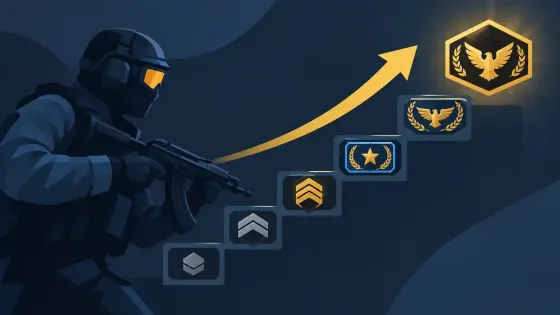
The best feedback also gives the player something to do after the call. One session will not permanently fix bad habits. A review that mentions practice routines, demo notes, a ranking climb plan, or follow-up questions is generally more useful than one focused only on the coach’s rank.
Read CS2 Coach Reviews for Your Own Problem
A coach who helps a newer player learn basic economy may not be the right fit for an experienced player trying to improve their FACEIT decision-making. Before reading reviews, define the issue you want to solve.
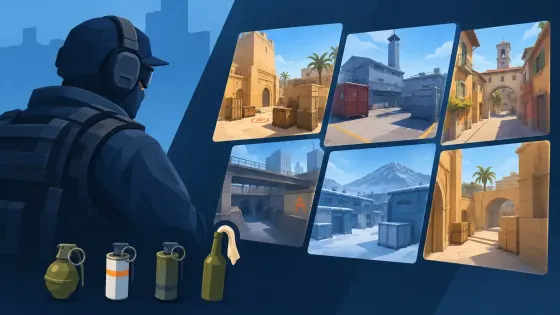
If you lose most of your opening duels, look for feedback about crosshair placement, peeking, movement, angle isolation, and pre-aim. If your team falls apart after the first minute, reviews mentioning communication, rotations, trading, and mid-round structure are more relevant. If you feel lost on certain maps, prioritize map-specific VOD work and utility plans over generic aim advice.
This matters because “improved a lot” means different things to different players. A player climbing out of lower ranks may need clear fundamentals. A player already comfortable with mechanics may need help spotting predictable tendencies and turning information into better calls. Neither need is better. They simply require a different coaching approach.
Role matters too. An aggressive rifler, an anchor, an AWPer, and an in-game leader will not get the same value from the same session. Reviews that identify the reviewer’s role are especially helpful because they show whether a coach can adapt rather than repeat one fixed lesson.
Signs a Review Is Worth Trusting
One review should never decide it. Read a group of recent reviews and look for patterns. If several players independently mention detailed demo analysis, clear explanations, and practical homework, that is more meaningful than a stack of short compliments.
Pay attention to the parts that are not perfect. Honest feedback often includes a limitation. For example, a player may say the coach was excellent at reviewing positioning but moved quickly through utility lineups, or that the session helped most after they came prepared with demos. Those details make a review more believable and help set expectations.
It is also useful when players explain their starting point. You do not need an exact rank in every review, but context helps you judge relevance. “I understood why I was dying on B holds” says more than “worth it,” especially if you struggle with the same situation.
Be careful with claims that promise a certain rank after one session. Coaching can improve your understanding and give you a better practice structure, but your results still depend on your time, consistency, teammates, map pool, and ability to apply the feedback under pressure. A good coach helps you build better decisions. They cannot play every future round for you.
Reward boxes
Open a box, win real rewards
Spend N1 Coins to open a box and win coins, checkout discounts, or a free coaching/boost service.







What Reviews Cannot Tell You Alone
Reviews are part of the picture, not the whole picture. Even detailed feedback cannot tell you whether your communication styles will match. Some players want a direct breakdown with blunt corrections. Others learn better when the coach asks questions and helps them reach the answer themselves.
Check the coaching format before booking. A one-on-one live session can be useful when you need immediate feedback on decision-making. VOD review is often better when you want to slow down and understand repeated mistakes across several matches. Discord Q&A can add value if it is used for quick follow-up questions instead of replacing the main review.
You should also know what you are expected to provide. A productive session may require recent demos, a short description of your goals, and honest answers about where you struggle. Sending a random match without context can still produce feedback, but the coach has less to work with.
Pricing should be clear before you commit. The same goes for session length, the format of feedback, and whether you receive notes or a practice plan. If a service offers configurable options, read them carefully instead of assuming every coaching order includes the same deliverables.
How to Get Better Value From a CS2 Coaching Session
The player has a job in coaching too. Choose one or two priorities rather than asking to fix aim, utility, game sense, communication, and rank all at once. A focused session produces feedback you can actually use in your next games.
Bring recent matches that show the problem. A loss can be more useful than a win, but neither is automatically better. The key is that the demo contains moments where you were unsure what to do: a retake, an entry, a late-round rotation, an economy decision, or a post-plant.
During the session, ask for the reason behind each correction. If the coach tells you to stop taking a certain peek, ask what information should make you take it instead. That turns a rule into a decision-making tool. Write down no more than a few actions to practice afterward, then review your own matches to see whether you followed them.
Give it enough time to judge the result. A better stat line in one game is nice, but it is not the main test. The real question is whether you recognize situations earlier, make cleaner choices, and understand your mistakes without needing someone else to point them out every round.
Coaching, Boosting, and Account Decisions
Coaching and boosting solve different problems. Coaching is built around improving your own play. Boosting is a service where another player progresses an account, and it carries account-policy risk because it can conflict with game terms of service. Do not confuse a rank outcome with long-term improvement.
If your goal is to learn, reviews should tell you whether the coach gives you usable feedback and a repeatable process. If you are considering any account service, read the service conditions, privacy process, and refund rules before placing an order. Clear information matters more than broad promises.
The right CS2 coach review should leave you with a practical picture: what the coach teaches, who benefits most, how the session runs, and what work still belongs to you. Choose the feedback that matches your actual weakness, then show up with a demo and a question worth answering.
Ready to climb in CS2?
Pick a service, set your options and get matched with a verified booster. Secure checkout and 24/7 support.
 CS2 Premier Rank Boost
 CS2 Premier Placement Boost
 CS2 Competitive Win Boost
 CS2 Faceit Level Boost
 CS2 Faceit Win Boost
- CS2 Wingman Boost
- VPN and offline mode
- Verified boosters
- 24/7 support